First-Time Omakase Dining: What to Expect and How to Enjoy It
If you have never experienced omakase dining, you may be wondering what makes it special, how the meal works, and whether there are certain traditions you should follow. Unlike ordering sushi from a traditional menu, omakase invites you to place your trust in the chef and enjoy a carefully selected series of dishes.
At Blue Pagoda in San Jose, omakase is an opportunity to discover Japanese culinary craftsmanship in an intimate and welcoming setting. Whether you are celebrating a special occasion or simply exploring Japanese cuisine, knowing what to expect can make your first visit even more memorable.
What Happens During Your First Omakase Experience?
The word “omakase” translates roughly to “I leave it up to you.” Instead of selecting individual dishes, guests enjoy a chef-curated meal featuring carefully chosen ingredients, seasonal seafood, and creative preparations.
Each course is designed to contribute to the overall dining experience. Some dishes may feature delicate flavors and subtle textures, while others introduce richer ingredients or more complex combinations.
1. Your Meal Is Guided by the Chef
One of the most exciting aspects of omakase is not knowing exactly what will arrive next. The chef selects and prepares dishes based on ingredient quality, seasonality, and the intended progression of flavors.
At Blue Pagoda, Executive Chef Lang and his culinary team combine traditional Japanese techniques with modern influences. Their approach creates a dining experience where craftsmanship and presentation are just as important as flavor.
Guests can explore the restaurant’s omakase dining options before making a reservation.
2. Every Course Has a Purpose
Omakase is not simply a collection of sushi dishes. The order of each course can influence how guests experience flavor, texture, and aroma throughout the meal.
A chef may begin with lighter seafood selections before introducing richer cuts of fish or more intensely seasoned preparations. Warm dishes and a carefully selected dessert may also be included, depending on the restaurant’s current menu.
Rather than rushing through the meal, take time to appreciate the differences between each course. Notice how the texture of the fish, temperature of the rice, and balance of seasonings contribute to the overall experience.
3. Sushi Bar Seating Adds Another Dimension
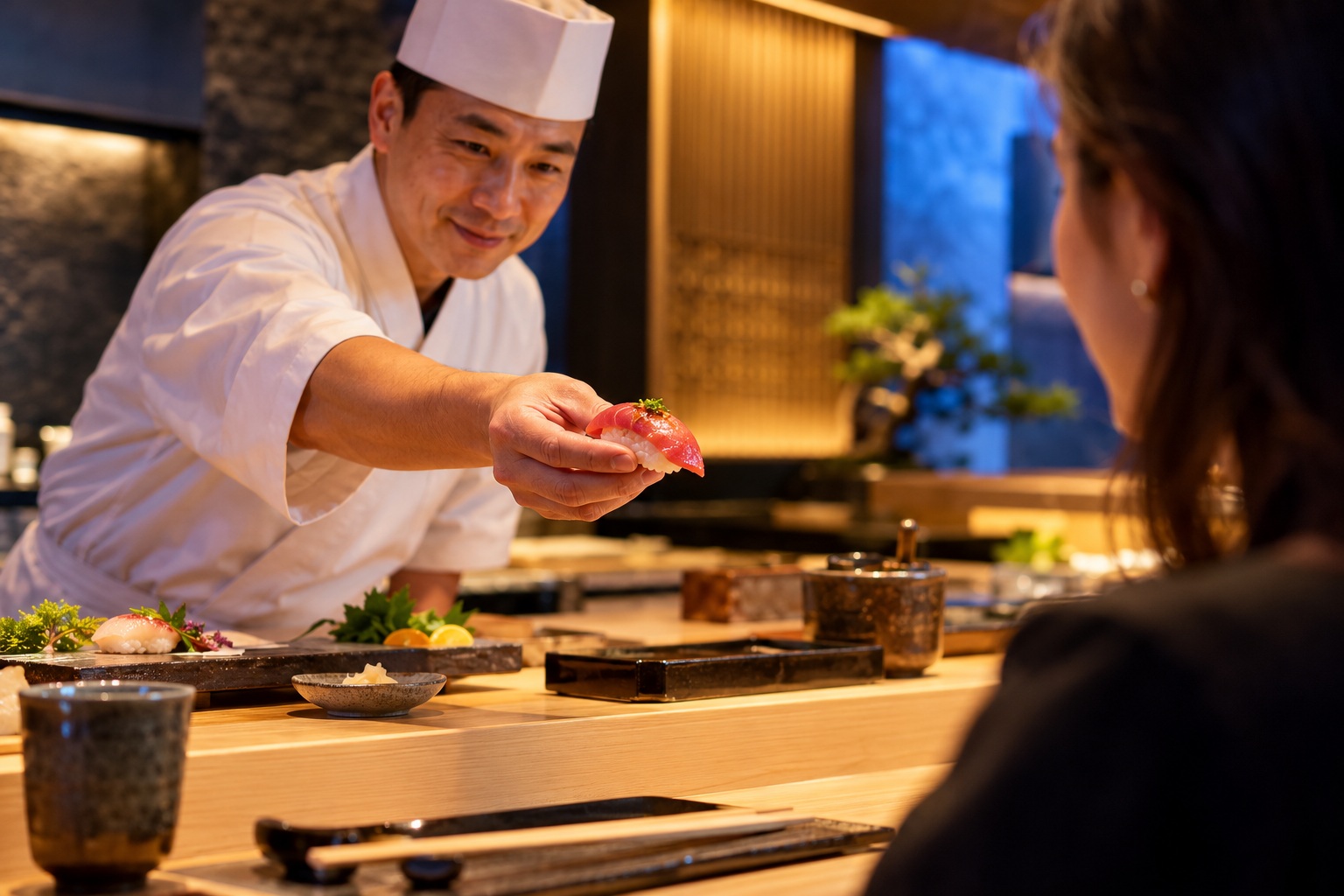
For guests interested in watching the preparation process, sushi bar seating offers a particularly engaging experience.
At Blue Pagoda, the sushi bar experience allows guests to observe the chefs as they prepare and present individual courses. From precise knife work to delicate garnishing, every movement reflects the attention required to create exceptional sushi.
Dining at the sushi bar can also provide opportunities to learn more about unfamiliar ingredients and preparation techniques.
Omakase Etiquette and Tips for First-Time Guests
If you are new to omakase, there is no need to feel intimidated. A few simple guidelines can help you appreciate the experience while showing respect for the chef and the food.
Arrive on time. Omakase meals often follow a carefully planned progression. Arriving promptly helps ensure you can enjoy the complete experience without feeling rushed.
Share dietary restrictions in advance. If you have food allergies or ingredients you cannot eat, contact the restaurant before your reservation. Because omakase menus are chef-curated, accommodations may depend on advance notice and ingredient availability.
Enjoy each piece when it is served. Sushi is often prepared to be enjoyed immediately, allowing guests to appreciate the intended temperature, texture, and balance of flavors.
Use soy sauce thoughtfully. Some sushi arrives already seasoned by the chef. Before adding soy sauce or wasabi, consider tasting the piece as presented. Additional seasoning may overpower delicate ingredients.
Ask thoughtful questions. If you are curious about a particular fish, preparation method, or ingredient, asking the chef at an appropriate moment can add another layer of appreciation to your meal.
For additional background on Japanese dining customs, explore the Japan National Tourism Organization, which provides information about Japanese food, culture, and travel traditions.
Approach the experience with an open mind. One of the greatest pleasures of omakase is discovering flavors you might never have chosen from a traditional menu. Trying unfamiliar ingredients is part of what makes the experience rewarding.
Make your first omakase experience memorable at Blue Pagoda. Located in San Jose, Blue Pagoda offers a refined setting where Japanese culinary traditions meet contemporary creativity. Whether you choose the dining room or sushi bar, the experience is designed to encourage guests to slow down, explore new flavors, and appreciate the artistry of each course.
Ready to discover what omakase dining is all about? Visit Blue Pagoda to explore the restaurant and make your reservation for a memorable Japanese dining experience.